CJC / Ipamorelin
Two components whose exact forms must be distinguished.
Structure & history · Laboratory research reference
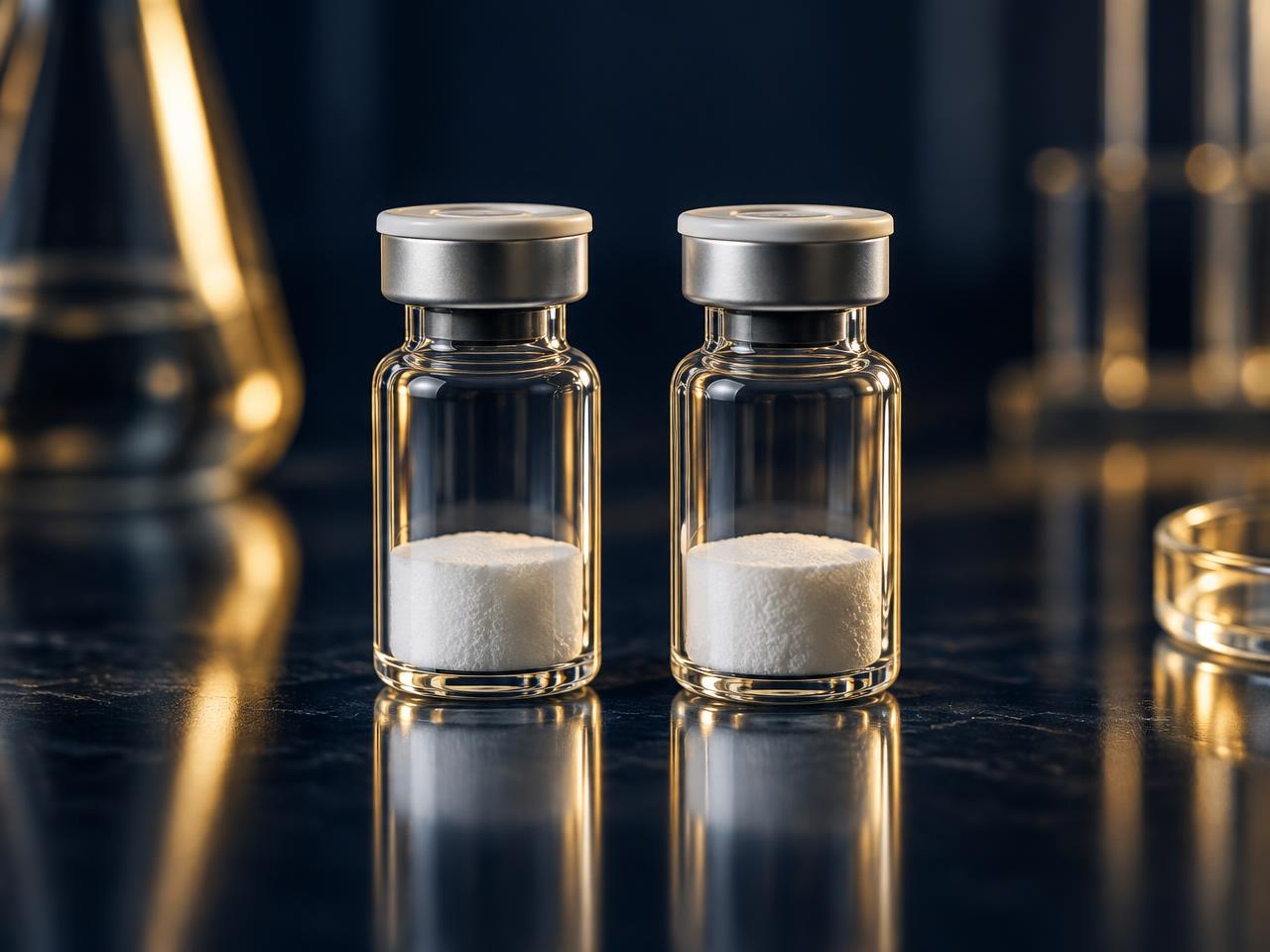
Quick facts
- Compound class
- Mixture of distinct synthetic peptides
- Origins & first reports
- Component publications: ipamorelin in 1998; original CJC-1295 in 2005.
The catalogue supplies a No DAC variant. Original CJC-1295 chemistry cannot be assigned to that variant; these sources describe the individual components, not the commercial mixture.
Did you know?
- Ipamorelin is a five-residue peptide containing noncanonical residues.
- The original DAC-containing CJC-1295 has an albumin-reactive chemical group.
- A mixture has no single amino-acid sequence or molecular formula.
Published research
- 1998Preclinical · in vitro & animal models
European Journal of Endocrinology
Original characterisation of ipamorelin's selectivity in pituitary cell and animal models.
View on PubMed - 1999Preclinical · rat model
Growth Hormone & IGF Research
Measured longitudinal bone growth parameters in rats.
View on PubMed - 1999Clinical
Pharmaceutical Research
Pharmacokinetic–pharmacodynamic modelling design; described by design and topic only.
View on PubMed
Summaries describe published research for reference only. Peptiora materials are supplied for in-vitro laboratory research and are not intended for human or veterinary use.
Source notes
Research materials & tools
Related peptides & research materials
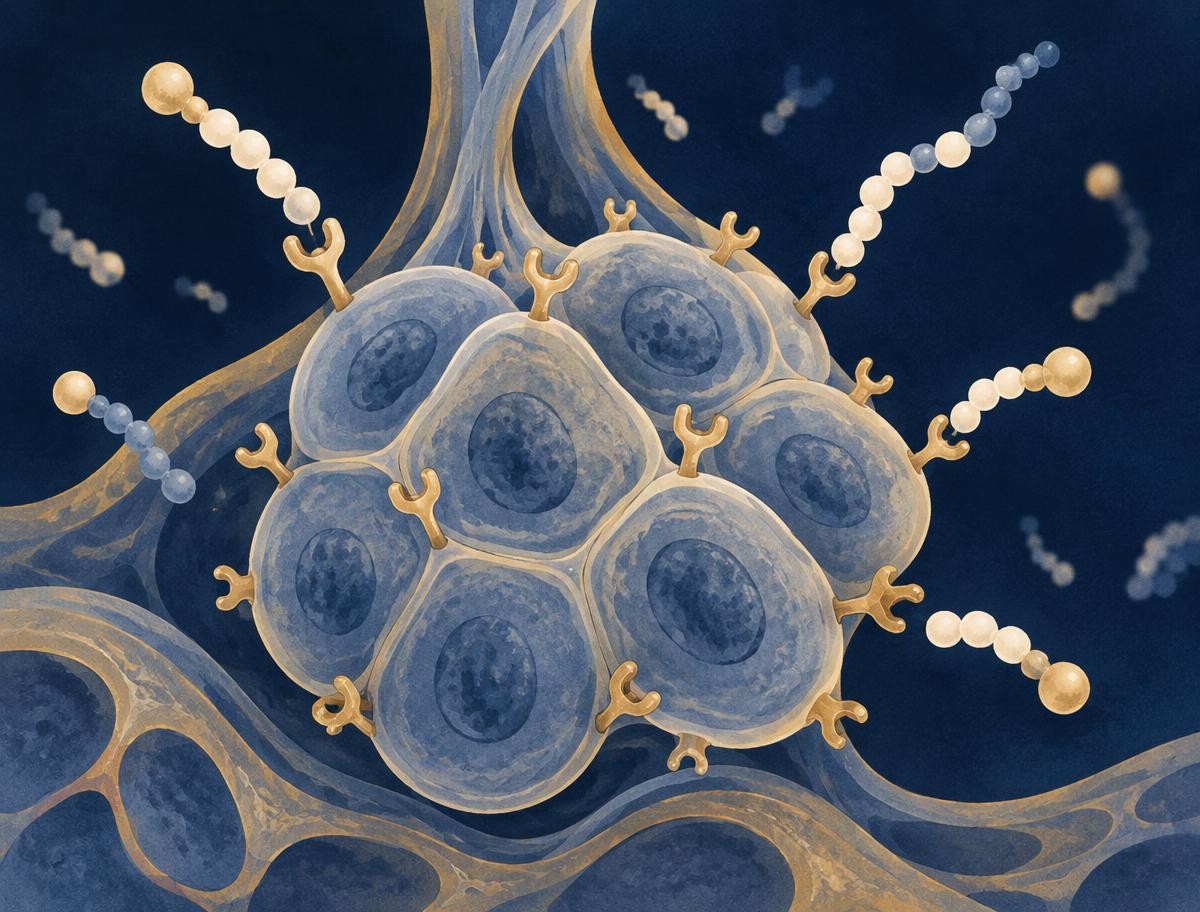
Endocrine Signalling · 3 min read
Tesamorelin
A 44-residue GHRH analogue with a chemically modified N-terminus. Synthetic N-acylated GHRH analogue.
Read articleAll products supplied by Peptiora are for laboratory research use only (RUO). Not for human or veterinary use, diagnostic use, or therapeutic use.