Glutathione
A tripeptide connected through an unusual gamma-glutamyl bond.
Structure & history · Laboratory research reference
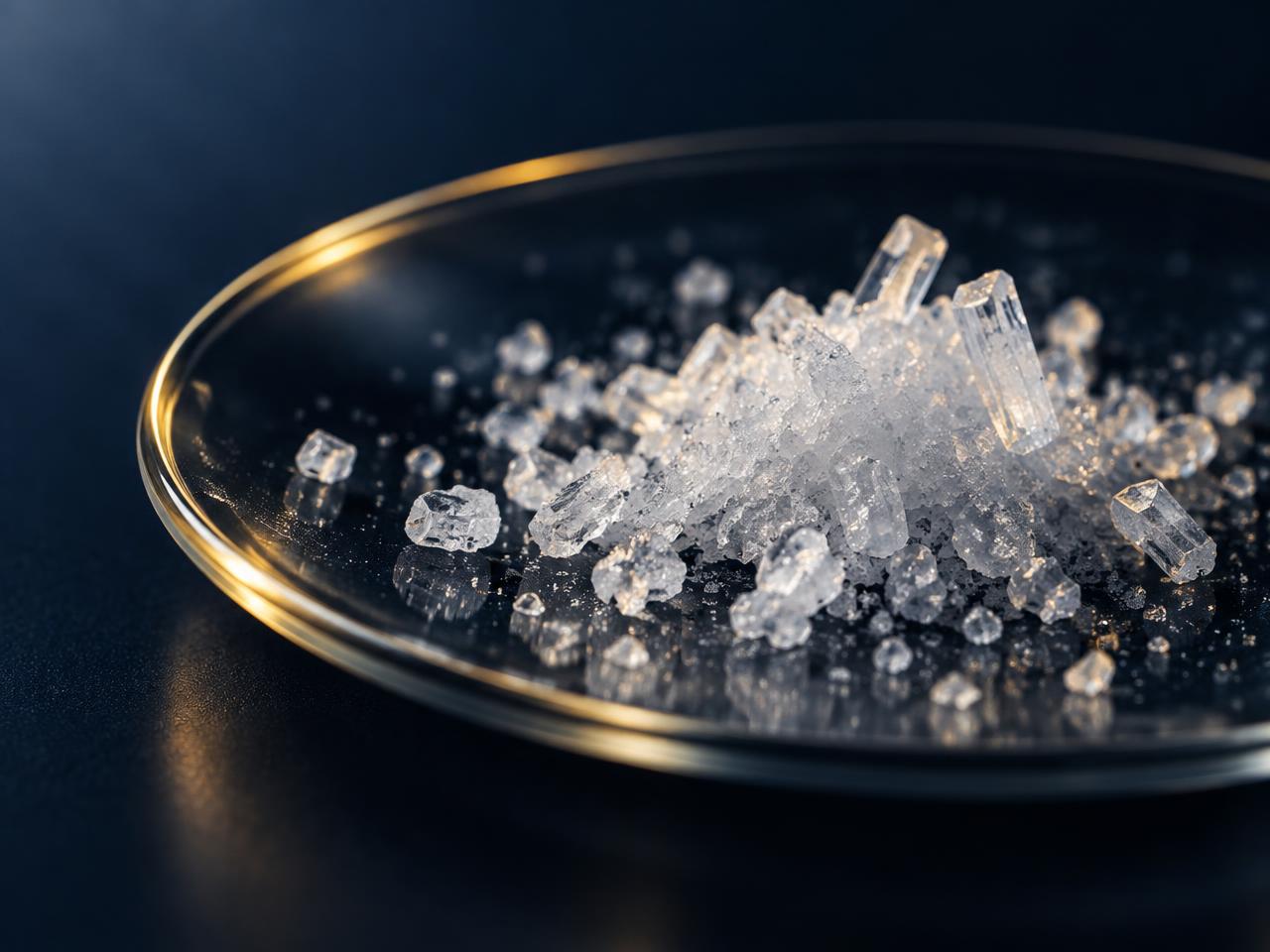
Quick facts
- Compound class
- Gamma-glutamyl tripeptide
- Sequence length
- 3 amino acids
- Molecular formula
- C10H17N3O6S
- Average molar mass
- 307.33 g/mol
- Origins & first reports
- Historical observations date to 1888; Hopkins named glutathione in 1921.
Formula and average molar mass describe reduced glutathione (GSH), not GSSG or salts.
Did you know?
- Glutamate connects to cysteine through its side-chain gamma-carboxyl group.
- Oxidized glutathione, GSSG, joins two glutathione units through a disulfide.
- Early investigators initially interpreted it as a dipeptide.
Published research
- 2015Clinical
European Journal of Nutrition
Randomised controlled design measuring glutathione levels in blood and tissue compartments; described by design and topic only.
View on PubMed - 2015Clinical
Redox Biology
Crossover design comparing oxidative-stress markers across three glutathione-related forms; described by design and topic only.
View on PubMed
Summaries describe published research for reference only. Peptiora materials are supplied for in-vitro laboratory research and are not intended for human or veterinary use.
Research timeline
1888
De Rey-Pailhade described a sulfur-reactive cellular substance.
1921
Hopkins isolated and named glutathione.
1922
Hopkins and Dixon described its reversible oxidation–reduction system.
Source notes
Research materials & tools
Related peptides & research materials
Cellular Biochemistry · 4 min read
NAD+
A dinucleotide cofactor with more than a century of chemical history. Pyridine dinucleotide coenzyme · not a peptide.
Read article
Cellular Biochemistry · 4 min read
MOTS-c
A short sequence reported within the mitochondrial 12S rRNA region. Mitochondrial-derived peptide.
Read articleAll products supplied by Peptiora are for laboratory research use only (RUO). Not for human or veterinary use, diagnostic use, or therapeutic use.